
As a newcomer to the KMC, you may not be familiar with the signage that will guide you, warn you and tell you what you cannot do! “Do this, don’t do that…can’t you read the sign?”
This page is not about road signs because you already should know about those as you should have passed your USAREUR license test right? No, this page is about those signs the apply to hikers and biker.
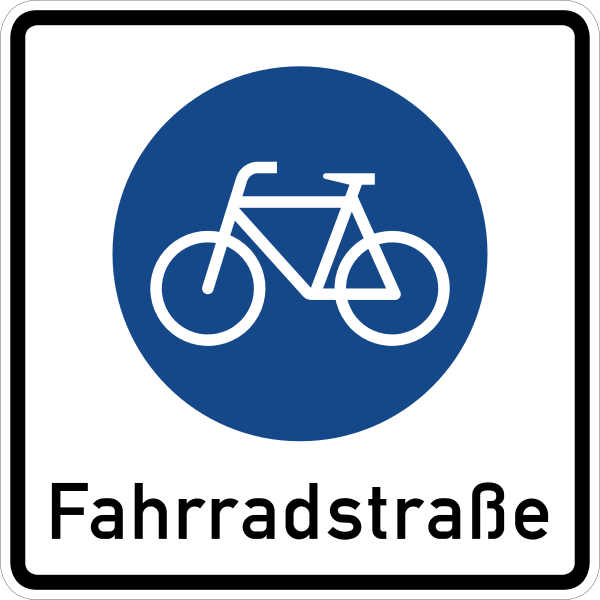
Bicycles Signs
Germany is a very “bicycle friendly” country and citizens take their biking seriously. Be sure to follow the signs lest you be chastised by locals.
There are many bicycle paths, many of which are on the sides of streets where you have to share the path with pedestrians.

BE CAREFUL: pedestrians tend wander onto your side of the path and they may not respond to bells or horns because they are wearing earbuds and/or lost in their own worlds.
Remember that you must ride your bike on the right side of the road, that is with the flow of vehicle traffic. Sometimes the signs will allow you to ride against the flow. Generally, if you see the sign above on the left side of the street, you’re good to go. You may also see a sign like this one that lets you know that bicycles are allowed in both directions on the same path.

Direction signs for bicycles
Isn’t Germany a great bicycling nation? They even make getting to your destination somewhat easy. This sign shows you the directions to certain destinations on official bike paths.
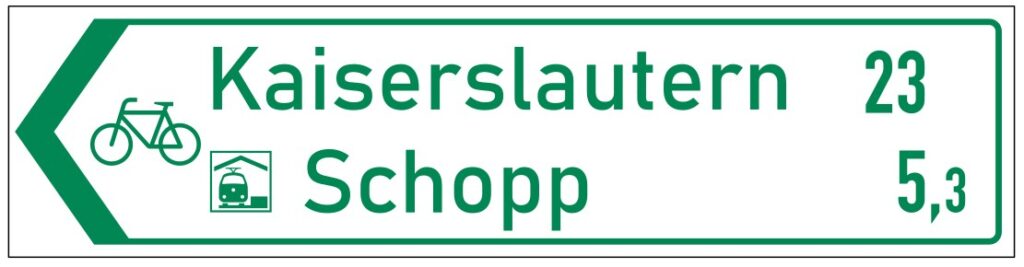
There may not always be signs like the one above to guide you. However, if you are on an official bike path, just look for this sign:

Just follow the arrow and you will be good to go.
Hiking signs
Signs on trails come in all different forms. Sometimes they are on dedicated posts with metal direction signs, or they might be a cryptic symbol hand-painted on a tree or fence post. Not to worry, we will demystify these mysterious markings for you!
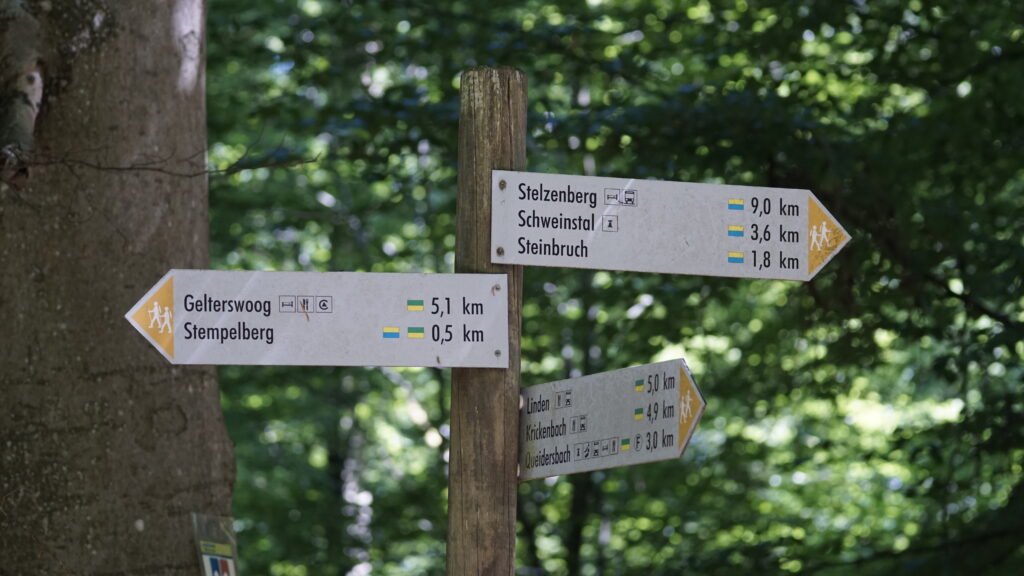
Trail markers
It is not always feasible to erect posts with signage in the middle of the deep, dark wood. So volunteers accomplish this by hand-painting markers on trees, rocks and other things.
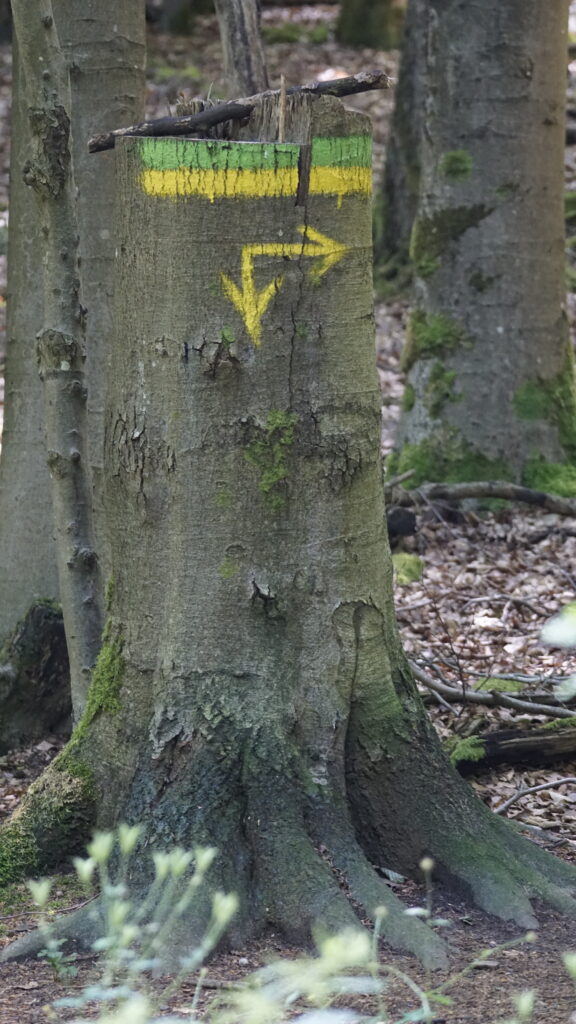
Of course, you have no idea what the symbol means, but KMC Explorer is here for you! Here are some of those symbols and what they mean.

Pfälzerwald Grün-Gelber Balken. This trail is 138 km long and goes from Kirchheimbolanden to Fischbach bei Dahn

Pfälzerwald Gelb-Blauer Balken. 40 km long trail from Kindsbach to Elmstein

The Way of St. James Pilgrimage Trail. This series of trails runs all over central Europe with part of it running right through Kaiserslautern and is a UNESCO World Heritage site in itself. The total distance is thought to be over 1000 km.
These are but a few of the many trails available in the KMC. If you want to find out more, go to Waymarked Trails to see which trails run past your home!
GOOD TO KNOW: there are plenty of places in the Palatinate Forest where phone reception is shoddy at best. Bear this in mind when planning your hike as you may not be able to navigate offline. There are some apps that allow your to do this and if you’re hardcore, you already know which apps work.
If you plan for a really long hike, don’t think you can stop and set up camp.
To camp or not to camp
By German law, you cannot just pitch a tent and set a camp fire where ever you please. No, no. Camping, like everything else in Germany, is highly regulated. You can only camp in designated areas and this usually requires a fee. You may find yourself wedged between trailers because most German campgrounds are built with trailers and RVs in mind.
Just remember to follow the signs and it will all work out in the end!
